Rated: ♥ ♥ ♥ ♥ . ♥ {4.40}
Action: ♠♠♠.♠ / Emotion: ♣♣♣♣♣ / Romance: ♥♥♥♥.♥ / Sensuous: ♦ / Suspense: ♠♠♠.♠
Action: 3.5 / Emotion: 5.0 / Romance: 4.5 / Sensuous: 1.0 / Suspense: 3.5 // Historical Flavor: 4.7 // Laughter: 12 / Giggle: 2 // Tears: 3 / Teary: 0
❀ . . Top . . ❀ . . Review . . ❀ . . Series . . ❀ . . Characters . . ❀ . . Quotes . . ❀ . . Links . . ❀ . . End. . ❀
Era: 1252
= = = = = = = = = = = = = = = = = = = = = = = = = = = = =
I love Medieval Romance books. However, it is obvious that publishers and authors have drifted away from this time period, so it was necessary to grab what is considered on older book to find such a novel. Once A Knight, Christina Dodd's first book in The Good Knights Duet, turned out to be a thoroughly enjoyable, entertaining book that takes readers back in time.
It took a bit of time to get deeply immersed into this story because, unlike today's books, Dodd took readers on a slow, but steady path towards plotting developments and character introductions. Walking that path with Dodd was well worth the journey. This book was not full of fluffy, simplistic characters whose personalities were splashed lavishly across the pages, but rather Dodd wrote about complex people whose layers were peeled away so they could worm their way into the cockles of your heart.
Dodd employed a unique voice to open the book. Introduced later in the story, the eleven-year-old precocious, spunky, endearing page named Eudo began telling readers about events that had been taking place at the castle, the village, and the demesne owned and regulated by it's very exacting and proper mistress, Alisoun, the countess of George's Cross. Through Eudo's narrative, Dodd began introducing and fleshing out several of the main characters that walked though this book by explaining that there was something very wrong going on at George's Cross. But little Eudo (and thus, readers) have no idea exactly what that something is. But it is obvious that danger lurks in the shadows and Alisoun is being targeted.
Because of the way Sir Walter was introduced, it was impossible not to wonder if maybe he was part of the problem. When Lady Edlyn had been abducted while the people of George's Cross were out of the gates at a picnic near the woods, his response revealed his lack of respect for his chatelaine.
He didn't rise from his seat to ask the question, or act in any way concerned, and I again realized how much I disliked him. For all his superior airs, he was nothing but a knight, elevated by Lady Alisoun to the role of her steward. He was supposed to secure her estates, but today he could scarcely unwrapp himself from his woman long enough to show respect.Alisoun was introduced through the adoring eyes of Eudo, but the picture he painted of Alisoun was very revealing.
Looking around I saw the same dislike mirrored on everyone's face. (Eudo, page 3)
We held our breath, waiting for Lady Alisoun's reprimand. She might be the epitome of a lady, but she could reduce a grown man to tears with a few well-chosen words. (Eudo, page 4)Dodd's sense of humor also began to show through the story when Alisoun revealed that while she may have portrayed a sense of serenity and calmness, she was not above acting like a normal, irritated human being.
Such impetuous behavior surprised me. Lady Alisoun gave me a sense of safety and stability, but I would never, never have spontaneously sought comfort from her. Indeed, Lady Alisoun staggered back under the weight, then carefully, as if she weren't sure of herself, she wrapped Lady Edlyn in her arms. Lady Edlyn kept burrowing closer, as if she needed to rest in Alisoun's heart to once again feel secure. (Eudo, page 11)
"When I need your advice on the noble girls I foster, Sir Walter, I will certainly ask for it." She released a branch too soon, and it slapped him in the face.Although Eudo didn't understand the information being delivered by the words that he was overhearing, Dodd revealed to readers that Alisoun knew very well who was targeting her and George's Cross as she talked with her new ladies maid, Philippa.
"Good shot, my lady," I mumbled, but she pretended not to hear. (Eudo, page 7)
Lady Alisoun said, "I've got to do it, Philippa."Sir David of Radcliffe was a very original hero. He was not portrayed as the ultra handsome, incredibly roguish, suave and debonair, ultimate fighting machine that authors usually draw from the standard pool of heros found in most of today's novels. David was past his prime, had gray at his temples and on the morning that Alisoun found him he was laying hungover in an alehouse after drinking away his sorrows at losing his title as the King's Champion the day before.
And Philippa whispered, "I brought this misfortune on you."
"Don't you dare apologize!" Obviously Lady Alisoun's voice came out louder than she wanted. She glanced frantically at Sir Walter, who strained to hear, then lowered her voice. "It's not you, it's him. I've never let a man frightened me, and I'm not going to start now. I made a vow to protect you. Now I'm going to keep it. I'm going to Lancaster. I'm going to hire the legendary Sir David of Radcliffe." (Eudo, page 15)
he was the legendary mercenary. He even looked the part. His rangy form and grace proclaimed his strength. The threads of gray in his dark hair proclaimed his experience. Hard heavy brows lent a severity to his expression, and his eyes had seen much. Yet his mouth saved him from the ruthlessness of most mercenaries. He grinned, he grimaced, he pursed his lips in avarice. Every thought that crossed his mind, he expressed with his mouth, and without saying a word. (Alisoun, page 26)

David, however, was a wonderful hero. The one thing that stood out the most about David, as Dodd pealed back the layers to reveal his willingness to acknowledge who he was, to accept that he had faults as well as strengths, was his ability to look at the bright side of life in spite of all the hard knocks dealt out to him. And, boy, were the hard knocks plentiful. After his parents sent David out into the world with just a sword and shield, he proved his worth by winning tournaments, becoming the King's Champion, and being given a wife with lands so he had his own place. While it would have been nice if Dodd had painted a picture of David's past, she choose instead to reveal how David dealt with the blows perpetuated upon him.
So even though David was given a wife with lands, the wife sounded like everything that a man despised.
Not even the prospect of another baby to cherish could overcome David's distaste for bedding a woman who increasingly looked like a molting duck and smelled like its favorite grub. (David's description of his wife, page 50)The reason David accepted Alisoun's offer of a job to protect her was because of the cold, hard coin she presented in exchange for his services. David was desperate because his daughter and his people were starving after two years of famine. And then when David arrived at George's Cross and saw the prosperity and wealth, he realized he was in a perfect position to court and win Alisoun as his wife, promoting him from starvation and obscurity into a life of privilege. David recognized that he was not the perfect candidate as a husband to the opinionated countess of George's Cross, but he knew that he was a tactical genius and could turn this event to his benefit.
other, greater nobles had tried to keep him in his place. Other, greater circumstances had oppressed him, and he had merged tough, resilient, superior. His difficult life had taught him much and given him the advantage over this well-bred lady. He had only to remember that. (David, page 100)Thus is was that David began to play close attention to Alisoun, the person, to see if he could figure out what was behind her emotionless face, her tendency to organize everyone and everything, and her sense of duty. Just like David, readers had to pay close attention to realize that underneath her stern, unrelenting exterior, Alisoun was full of emotions. But because she had been trained since childhood to repress those emotions, it was difficult for her to express them.
The way Dodd developed this heroine's personality was so original. After reading quite a few Contemporary Romances lately that feature heroines who have hidden their emotions behind facades that are recognized in today's society (sarcasm, smart-remarks, 'I don't care' attitudes, ice cold personas, and an unwillingness to open their hearts to the hero chasing after them), it was interesting that Dodd came up with an original way to present just such a heroine (with suppressed emotions due to her upbringing), that she came across as cold and unfeeling -- and dealt with it in the manner that was allowable back in England in 1252. Today's woman could have became a cold, unfeeling, calculating CEO, attorney, or assassin, to step on the people who got in her way, but Lady Alisoun hid her hurts behind a mask of cold responsibility -- the only acceptable role allowed to a medieval woman.
Dodd did such a fantastic job of developing the layers of Lady Alisoun's personality that if you looked closer, just as David did, Lady Alisoun was consumed with emotions . . . but she had so successfully learned how to suppress those emotions that nobody could even tell she had them. Alisoun fought back against the men ruling her world in the only way she knew how -- with a superior intellect, a sharp tongue (even though every word that issued from her mouth came out in the most even of tones), and a judicious use of her wealth.
After reading several reviews online in which the reviewers labeled Alisoun as having no emotions, it became abundantly clear that too many readers have been reading too many simplistic books -- and consider them to be great reads. It was truly surprising to see how many romance readers seemed to have no depth of understanding as they read (then reviewed) this book. It could be because they have been reading too many of the current batch of self-published novels (and the like) that have been delivering story after endless story filled with under-developed characters who just want to hook up and have sex. Maybe they don't understand that a gifted writer reveals the hidden depths of her characters in a circuitous manner, slowly developing the relationship between the protagonists -- instead of introducing them and hooking them up after seventeen pages of innuendo.
Didn't these reviewers read the details about the cat? Dodd didn't spell it out for us in black and white. She didn't write something like: "When Alisoun learned how her cat had been killed, her heart splintered into pieces. She cried for a week!" Rather, Dodd, in subtle nuances, revealed the depth of Alisoun's anguish regarding her feelings about the way the cold, cruel, villain had abused her cat.
David (who didn't know how the previous cat had perished) thought it would be a romantic gesture to replace the cat that Alisoun had lost by giving her a cute little kitten.
A blinking black kitten lifted its head and looked around.This scene (and the other scenes featuring Alisoun and that cute little kitten throughout the rest of the book) was so well written that it just screamed out how deeply the death of her cat had impacted Alisoun. Alisoun did not show it, but it was obvious to anyone who was paying attention that Alisoun was afraid of the pain to herself and this kitten should the villain learn that Alisoun had grown to love that kitten.
Alisoun jump back.
"It's only a kitten," he said.
"I can see that," she answered irritably.
"You're acting as if it were a wolf, prepared to eat you." Gathering up the tiny creature, he scratched it under the chin, then waved it in her face. "Isn't it cute?"
She flinched. "What are you doing with it?"
"Giving it to you. Eudo said your cat had been killed, and --"
"Oh, nay." She waved her hands. "I don't want another cat."
Placing the creature on the tabletop, he said. "I thought you liked cats."
"I do." She watched as the little thing scampered over to the edge and looked down. "In their proper place."
. . .
She stared as the kitten sauntered toward one of the lit candles, then realized that David, too sauntered -- but he was heading out the door. "Wait! You take it." Then, belatedly, "where are you going?"
"To train your squires." He stuck his head back in. "May I depend upon your messenger to again take the gold to Radcliffe?"
"In sooth, but the cat --" (David and Alisoun, pages 145-146)
While David was charming the common folk, spending time with Eudo, and cuddling Philippa's baby, Hazel, he noticed that Alisoun had no clue when it came to touching people and offering them warmth. It was so easy to recognize that Alisoun had no idea how to touch and interact with children and babies because she had not been offered the same warmth and attention during her own childhood. Philippa, at one point, suggested to Alisoun that she was acting like their foster mother.
"But once a person starts to slide down the winding road of sloth, she'll find it hard to claw her way back to the straight and narrow way."Although it made no sense (having no understanding of medieval culture and of a medieval woman's mindset), when Walter, in his effort to embarrass David for supplanting him in his role of protector, revealed to Alisoun and the villagers that the legend of Sir David of Radcliffe was no more, Alisoun reviewed her options when it came to making her people feel safe once again and made her way to David's bed. It worked because David took advantage of the situation, in his efforts to convince Alisoun that she should make him her husband, and threw the bloodied bedsheet out the window.
"Do you have to quote Lady Frances to me always?" Philippa complained.
"She was the lady who fostered us!"
"She was a mean old woman who sucked the joy from life."
"I didn't know you felt that way. I am shocked."
Philippa flung her little pile of weeds at Alisoun, scattering them across the herbs. "Nay, you're not. You always thought that, too. You just never dared to admit it." (Alisoun and Philippa, page 159)
Because of the year in which this book was written (1996) it was not surprising that Dodd did not regale readers with a lot of sensuality, heat and passion in the lovemaking scenes. In fact, most of the time readers only knew that David and Alisoun were continuing to share a bed was because they were told so as the story progressed. And, quite often, it was because David was frustrated at having to do all the work to bring Alisoun to a point of passion and loss of control.
David is more than happy to be home with his beloved daughter, who wants to be a mercenary like her father and is the epitome of a wild child. Naturally, there is the war between the daughter and the new wife and words are spoken that cause Alisoun to reveal her own insecurities by telling David that he would no longer be sleeping in her chamber.
Yes, Alisoun was difficult to warm up to, but because of the nuances Dodd inserted about her personality as the story progressed, it was easy to overlook her sternness, her lack of humor and her tendency to run everyone and everything because, as a romance reader, it was safe to assume that eventually David would break through Alisoun's barriers and teach her to laugh and relax. But the way that Alisoun reacted to David's actions during the big climax at the end of the book when the villain showed up at Radcliffe immediately after David figured out what Alisoun had been hiding from him, made Alisoun lose big points in the acceptance category.
If Alisoun had only been forthcoming, David might have been able to prepare himself for the confrontation. But because David chose the safety of his child, his people, and the security of his lands, Alisoun was livid. And stomped off with a really expressive display of emotion.
And, yes, in the end, David got to redeem himself and prove that wisdom and cunning were greater strengths than youth and a strong sword arm. Alison and David reunited and returned to Radcliffe, but David had yet to bring Alisoun to gales of laughter. Rather than give die hard romance readers an Epilogue featuring Alisoun actually laughing out loud with her husband and children, sadly, Dodd ended the book with a closing entry from Eudo similar to the opening salvo.
There were several memorable secondary characters included in this book. Eudo, was particularly endearing and the inclusion of his thoughts intermittently interjected throughout the book were enjoyable and added a unique flavor to the story. There were some truly priceless scenes featuring Eudo as he developed a relationship with David. Dodd, quite often, revealed a quick-witted sense of humor that brought forth laughter.
"He's the meanest piece of horseflesh you'll ever have the misfortune to meet. "David opened the gate, then led the horse toward the door. "But he thinks he owns you now, and he protects those he owns."Another engaging and entertaining secondary character was David's daughter, seven-year-old, Bertrade "Bert" of Radcliffe. The love between father and daughter was beautiful to behold. The sparks between Bert and Alisoun were expected. The scene between David, Eudo, Bert and Alison in the training field when David was trying to help Alisoun build a relationship with Bert was hilarious.
Eudo hopped down and followed, staying well back from Louis's hooves. "Even bastard boys?"
David and Louis eyed each other with understanding, then David said, "Especially bastard boys. Do you think Louis's parents were wed?" (David and Eudo, page 154)
Sir Walter was featured regularly throughout the story and it was soon revealed that he was one of the good guys. And while he quite often came across as irritating and pompous and above his station, there was one line that stood out that explained why he was perceived as the bad guy.
"You're the lady. You make judgments and I dispense the justice and direct the punishments. You pay me to be the one the peasants hate." (Sir Walter, page 73)For some reason, the two ladies that could quite often be found conversing with Alisoun were the least developed and described primary secondary characters featured in the book. Alisoun was fostering fifteen year old Lady Edlyn and there were many interactions between these two characters, but for some reason Edlyn didn't feel real. First, Lady Edlyn was given no physical descriptors. Dodd subtly developed Edlyn's personality from that of a starry-eyed young girl with a crush on the handsome young squire in training, Hugh de Florisoun, to a girl who accepted her role in life to be married off to an old duke because her family had six daughters and no money. Nevertheless Edlyn had no real "presence" in the book.
Philippa was another important member of the cast who seemed to melt into the background most of the time, even though it was obvious that Philippa was the reason that Alisoun and George's Cross was in danger. Again, Dodd gave Philippa no physical description so it was difficult to "imagine" her as she talked and visited with Alisoun and David. Philippa showed she had strength of character at the end of the book, but Dodd never, truly revealed the woman that Philippa was.
One secondary character that stood out in bold detail even though he was rarely on the pages of this book was Osbern, duke of Framlingford. It wasn't until much later in the book that Dodd revealed why she introduced Osbern into the story while Alisoun was sitting in the king's chamber at Lancaster. Maybe I'm slow-witted, but I didn't put the pieces together about why there was so much animosity between Alisoun and Osbern as they traded barbs in Lancaster. This obviously mean-spirited, full of himself, cousin of the king, was shown in all his splendor, strength and beauty. But because of the way that Dodd included this character into the story, she revealed that he was cruelty incarnate.

Several other secondary characters were included in the story and while they weren't given a lot of page time and were woefully undeveloped, they added greatly to the interest and development of the story. Those characters were {1} Ivo and {2} Gunnewatte, two of Alisoun's men-at-arms, who set themselves up as her personal guards, and {3} Sir Guy of Archers, David's best friend and comrade.
Dodd did a phenomenal job of giving the book a strong historical flavor. She included plenty of details that highlighted the everyday activities that took place in the lives of aristocrats and villagers in 1252 England. She detailed the obstacles that women faced as they had to deal with the fact that they were, basically, chattel to their fathers and husbands.
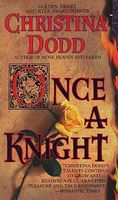
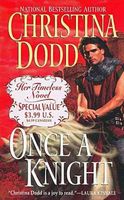
About the cover: I have the 1996 publication that features an original cover. I miss these attractive, artistically designed, old-fashioned covers that used to grace the front of Historical Romance Novels. The beautiful, ornate medieval-looking "O" in "Once" announced that the story inside was going to be historical. The yellow rose against an old parchment background adds that sense of old romance. And the attractive knight on his white stallion (on the insert page behind the cover) also adds a nice touch to the cover setting. This cover is so much more appealing than the new cover featuring a close-up of the harsh-looking face of an emotionless man with a sword slashing the bottom right-hand corner (implying he posed with sword in hand). And while it is understandable that the newest batch of romance readers may not pick up a book that has this "dated" cover, it is still preferable to the "new" one. (By the way, why do publishers change the covers of books?)
In closing, Once A Knight, the second book of The Good Knights Duet, was a nice, entertaining, well-written Medieval Romance. The book featured: {1} Sir David of Radcliffe, an unusual hero that was a delight to encounter with his strong sense of self, his ability to bring joy to others, and his sense of honor; {2} Alisoun, the countess of George's Cross, an unusual heroine, who ruled with precision, displayed no outwardly emotions, but underneath her cold shell, was a heart that longed for love; {3} some action scenes to give the story some excitement; {4} an undercurrent of suspense as David tried to figure out who was endangering Alisoun and her villagers; {5} a sense of romance as David did his best to penetrate the barriers around Alisoun's heart; {6} very little sensuality and heat involved in the old-fashioned love scenes; {7} a strong historical favor permeated the story; and {8} interesting, intriguing secondary characters added a richness to the book: {a} Eudo, the page; {b} Sir Walter, the steward; {c} Lady Edyln, the foster daughter; {d} Philippa, the ladies maid; {e} Hugh de Florisoun, a squire training for knighthood; {f} Ivo, a man-at-arms; {g} Gunnewatte, a man-at-arms; {h} Sir Guy of Archers, David's comrade; {i} Bertrade "Bert" of Radcliffe, David's daughter; and {j} Osbern, duke of Framlingford, the king's cousin. Romance readers who enjoy a good, deep, subtle Medieval Romance will definitely enjoy this book.
--Vonda M. Reid (Tuesday, February 24, 2015 : 3:29 a.m.) [368]
❀ . . Top . . ❀ . . Review . . ❀ . . Series . . ❀ . . Characters . . ❀ . . Quotes . . ❀ . . Links . . ❀ . . End. . ❀
| # | Date | Title | Hero | Heroine |
|---|---|---|---|---|
| 01. | 02-1996 | Once A Knight | Sir David of Radcliffe: legendary: king's champion | Alisoun, countess of George's Cross |
| 02. | 04-1996 | A Knight To Remember | Hugh de Florisoun: renowned warrior | Lady Edlyn: skilled herbalist in convent |
❀ . . Top . . ❀ . . Review . . ❀ . . Series . . ❀ . . Characters . . ❀ . . Quotes . . ❀ . . Links . . ❀ . . End. . ❀
| Character | Description |
|---|---|
| Sir David of Radcliffe | [Hero] legendary (15) the king's own champion (17) held 15 knights at bay while the king remounted and escaped (17) suspicious by nature (20) rangy form and grace proclaimed his strength; threads of gray in his dark hair proclaimed his experience; hard heavy brows lent a severity to his expression, and his eyes had seen much; his mouth saved him from the ruthlessness of most mercenaries; he grinned; he grimaced; he pursed his lips in avarice; every thought that crossed his mind, he expressed with his mouth, without saying a word (26) inherited nothing from his parents but an old shield and sword and an order to go out and make his way in the world; wife brought him lands through the marriage settlement (38) curious; confident (39) had a prestige about him (59) son of a poor baron (60) an ability to read a situation and assess it immediately (69) brown eyes, the color of old oak; brown hair so dark that the strands of gray gleamed like pewter; a tan face that had witnessed too many battles, too much hunger, too little kindness (71) scar snaked out of his scalp and down his back; the lobe of one ear was missing; did not brag about his triumphs (88) lost the little finger on his left hand; wiry muscles across his shoulders lifted the skin in impressive ripples; the veins on the back of his big hands rose in massive blue lines; variety of weapons had gnashed lines of flesh from his upper chest, leaving a gnarled pattern of black hair and white scars traced over his impressive pectorals (89) calluses deformed his toes; purple scarring rippled the scan from ankle to the knee; lost toe on one foot (90) too many months of near starvation had reduced his bulk (95) charmed and encouraged the common folk (131) became a legend by being a tactical genius (150) unusual strength; a sense of rightness (249) |
| Lady Alisoun | [Heroine] never did anything quickly; did everything deliberately and calmly (2) 24/5-y-o; expected proper behavior from all on her estate (3) the epitome of a lady; could reduce a grown man to tears with a few well-chosen words; funny-colored eyes (4) tall and slender; occasionally, she used her height to an advantage (9) the example of security and prosperity for George's Cross since the death of her parents when she was 13 (11) melodious voice (16) cool eyes as great as a wash of winter fog (17) tall; delicate; fair skin; slender fingers; rich; white velvet gown molded her curves with a loving touch (18) determined set of her chin ruined the almost perfect oval of her face (20) widow; eyes gray as flint; poised (21) countess at George's Cross; freckles across nose (23) 26-y-o; oldest widowed virgin in England and probably the Continent (30) inherited George's Cross and other states from her parents, then inherited the dower's portion of her husband's estates when he died; austere, emotionless features (38) perpetually took responsibility for everything and everybody; could strip a man of pride, of dignity, of sense with a few well-chosen words (51) courted the truth and dispensed only as much as she believed necessary (65) didn't know how to quarrel, for no one ever quarreled with her; never learned spontaneous repartee (143) red hair (151) the loneliest women David had ever met and she didn't even know it; kept so busy with her schedule she'd never learned to laugh, to show affection, to have fun (169) not demonstrative (210) an expert at detecting the sincerity of other's feelings (235) |
| . . . | . . . |
| Alnod | [One Appearance] one of the villagers of Radcliffe (278) |
| Andrew | [No Appearance] one of squires training at George's Cross; 17-y-o (66) |
| Sir Guy of Archers | [Secondary Character] a young night seeking to better himself; David did not take his possessions when he lost them in a tourney; is now David's devoted man to this day (59) |
| Avina | [Rare Appearances] one of the George's Cross village women; got David water from the well (56) |
| John of Beauchamp | [No Appearance] one of Alisoun's mercenary knights; traveled to Lancaster with Alisoun; spoke of receiving a better offer; did not arrive to at inn to return to George's Cross; fought beside David; a good man (43) |
| Roger of Bissonet | [One Appearance] duke of Framlingford's steward and faithful servant; one tooth; mighty fighter; not a deep thinker (336) |
| Lawton, duke of Cleere | [No Appearance] the man Edlyn's parents choose as her husband (110) an older man (112) |
| Easter | [One Appearance] George's Cross cook (70) |
| Lady Edlyn | [Secondary Character] 15-y-o; kind; beautiful; (2) came from a family of 6 girls (111) had soft spot for Hugh (221) |
| Eudo | [Secondary Character] page telling story; 11-y-o (2) a bit of a lad; all elbows and knees and big blue eyes; blond hair (116) Alisoun assigned him to be David's squire (117) long, freckled hands; dimples in his cheeks; teeth crowded his mouth, his grin spread almost from ear to ear; difficult to resist (119) clever (120) skinny back (124) bastard boy (154) |
| Fenchel | [One Appearance] the village reeve; skinny, balding little man (55) |
| Hugh de Florisoun | [Secondary Character] one of squires training at George's Cross; almost a man grown; as good as any experienced knight (66) |
| Osbern, duke of Framlingford | [Rare Appearances] the king's cousin; Alisoun's nemesis; represented to others that he was Alisoun's lover; powerful; influential; his wife had been Alisoun's best friend and her unexplained disappearance still created gossip (25) spectacular masculine beauty (26) charm used from his dashing figure, giving him a sheen most men envied; short black hair shown almost purple, like a black birds wings; blue eyes blazed with a heat of interest; sleek body rippled with muscle when he moved; older than Henry by 5 years (30) cruel; liked to hurt people (330) sleek black hair and flashing eyes, seemed the embodiment of masculine beauty; moved with an oiled grace; kept himself in the best fighting condition (334) charm scarcely covered his wretched soul (337) |
| Lady Frances | [No Appearance] fostered Philippa and Alisoun; mean old woman who sucked the joy from life (159) |
| Godric | [One Appearance] innkeeper of Crowing Cock Inn (33) |
| Simon, earl of Goodney | [One Appearance] the man King Henry chose as Alisoun's husband; carried his nobility, his wealth, and his responsibilities well; a distinguished man; a recent widow were; held lands in Poitou (28) nasal voice; breezed and shared through his open mouth; food encrusted his eating knife; groped her breasts with his filthy fingers (29) so much gold in his possession he had cobwebs over the coins; a pedigree to make our soverign blush; as thrifty as a Spaniard with a bottle of port (34) |
| Gunhild | [One Appearance] one of the George's Cross village women; repeated tales of David the mercenary (59) |
| Gunnewatte | [Secondary Character] one of Alisoun's men-at-arms (22) |
| Hazel | [Secondary Character] Philippa's daughter (77) |
| Heath | [Brief Appearance] Lady Alisoun's chief maid (3) |
| King Henry III | [Rare Appearances] holding court at Lancaster (25) 45-y-o; a superficial charm that covered his capricious nature; distasteful inclination toward sarcasm (26) mad for marriage; used it as a diplomatic coup, uniting England with Provence in his marriage (27) |
| Lothair of Hohenstaufen | [No Appearance] one of Alisoun's mercenary knights; traveled to Lancaster with Alisoun; spoke of receiving a better offer; did not arrive to at inn to return to George's Cross (43) |
| Ivo | [Secondary Character] one of castle's men-at-arms; big; dull (4) taller, broader, younger, in every way David's physical superior (23) a plain man; an honest man; viewed the world without imagination (376) |
| Jennings | [No Appearance] one of squires training at George's Cross; 14-y-o (66) |
| King Louis | [Animal] David's warhorse (36) massive white stallion had been part of the legend of David; six years of relative inactivity had left him with the attitude that tournament and combat were for younger horses (37) curiosity and confidence were as great as his masters (39) |
| Mabel | [Rare Appearances] George's Cross's alewife (72) gray haired woman (73) Alisoun's best healer (167) |
| Marlowe | [One Appearance] David's Radcliffe squire (292) |
| Nancy | [One Appearance] Radcliffe goose girl (318) |
| Philippa | [Secondary Character] kind (15) a handsome woman; had come to George's Cross from another of lady Alisoun's holdings; brought out of kindness because she had a babe but no husband (14) gentle (161) |
| Bertrade "Bert" of Radcliffe | [Secondary Character] David's daughter; thin face (38) looked healthy, far from starvation; brown hair had been cut to a stubble all around her skinny face (280) brown eyes sparkled; skinny legs and arms; wanted to be a mercenary like her Daddy (281) blatant impudence (282) 7-y-o (306) |
| Mary of Radcliffe | [No Appearance] David's wife; a whiny, frightened rabbit of a woman (38) did not like to incite her husband's lust; not even the prospect of another baby to cherish could overcome David's distaste for bedding a woman who increasingly looked like a molting duck and smelled like its favorite grub (50) |
| Sir Richard | [No Appearance] took David's little finger in a melee when he was fledgling (89) |
| Siwate | [One Appearance] stable boy; arguing with Eudo (152) |
| Tapestry | [Animal] Lady Alisoun's cat; special to her; brought her dead mice; died a few weeks ago; someone skinned her alive and nailed her to the castle gate (6) |
| Tochi | [No Appearance] old; knew more about growing herbs than anyone on the estate; answered Alisoun's questions with confidence and a smile (131) |
| Sir Walter | [Secondary Character] disliked by page and the rest of the villagers; for all his superior airs, he was nothing but a knight, elevated by Lady Alisoun to the role of steward; he was supposed to secure her estates, but today he could scarcely unwrap himself from this woman long enough to show respect (3) offensive manner (4) he didn't take a hint (8) ruddy complexion; blue eyes; lived at George's Cross for more than 20 years; steward since the death of Alisoun's parents; lips lost in his beard; barrel chest (9) he dispensed the judgement that Alisoun made (73) ran the castle with a stern hand; a knight who held his position for too long coming to think his place was secure regardless of his actions (74) puffed up little grouse of a man (75) thoughtlessly cruel (116) |
| Sybil | [One Appearance] slattern of an alewife (18) |
| Location / Organization | Description |
|---|---|
| Northumbria, England | Book Setting |
| Beckon | one of Alisoun's other estates; where the duchess of Framlingford came to visit Alisoun (261) |
| Crowing Cock Inn | where Alisoun was staying while in Lancaster (24) |
| George's Cross | Alisoun's demesne; considered the last bastion of civilization in the wilderness of Fells and woods on the Irish Sea (37) nestled in a valley not far from the sea, it surrounded a square big enough to hold a market every Lammas Day (54) |
| George's Cross Castle | rose like a rocky intrusion on the green, misty mountain (64) |
| Lancaster | where Sir David of Radcliffe could be found (15) where King Henry II was holding court (25) |
| Poitou | where Simon, earl of Goodney held lands; where the king wished to strengthen his ties (28) |
| Radcliffe | David's beloved land was beyond George's Cross (38) |
| Wessex | in the South of England; where Cleere was located (111) |
❀ . . Top . . ❀ . . Review . . ❀ . . Series . . ❀ . . Characters . . ❀ . . Quotes . . ❀ . . Links . . ❀ . . End. . ❀
| 4 | He didn't like me because he didn't think I knew my place. Actually, I did know it. I didn't keep to it, but I knew it. (Eudo) |
| 18 | he once more tasted defeat. Everything he had worked for, all his life, had turned to ashes, and now disaster stared him full in the face. His daughter would suffer. His people would starve. And he couldn't save them. The legendary mercenary David of Radcliffe had fallen at last. (David) |
| 32 | He had learned from his wife what idiots they were, but yesterday Alisoun had behaved like an average, rational person. (David) |
| 46 | Comprehending this woman took concentration. He had to try and wiggle through the complex byways of her woman's brain. That was a warrior's nightmare, but she told him nothing, so he had to think. (David) |
| 54 | Ivo snorted, a huge, moist explosion of exasperation. "How can m'lady go t' sleep wi' ye blatherin' on? Stop praisin' yerself an' get back t' yer pallet." (Ivo) |
| 56 | Usually she understood men only too well, and it fretted her to have one who occasionally escaped definition. (Alisoun) |
| 63 | David knew he was just a man. (David) |
| 71 | men were the king; they held all the land. Men were the father; they forced their daughters to do as they were told. Men were the husband; they beat their wives with rods. (Alisoun) |
| 80 | If nothing else, during his stay he'd get Alisoun to laugh aloud and free her servants from this senseless bondage. (David) |
| 99 | "Your lands are magnificent, but you're also quite attractive." She opened her mouth to retort, and he added, "When you keep quiet. That just doesn't seem to happen often." (David) |
| 100 | other, greater nobles had tried to keep him in his place. Other, greater circumstances had oppressed him, and he had merged tough, resilient, superior. His difficult life had taught him much and given him the advantage over this well-bred lady. He had only to remember that. (David) |
| 122 | "Good judgment comes from experience, and a lot of that comes from bad judgment." (David) |
| 124 | Horses were contrary, rude, and given to senseless fits of jealousy. He understood them much better than he understood women. (David) |
| 132 | "Dreams are the forms in your mind for you dance to the tune of what may be." (David) |
| 133 | She wanted to cling to the safety of her prejudices. (Alisoun) |
| 166 | "The legend is dead. Sir David of Radcliffe is nothing but a washed up, has been failure." (Walter) |
| 236 | "I've learned that women are better obeyed when they restrain their emotions." (Alisoun) |
❀ . . Top . . ❀ . . Review . . ❀ . . Series . . ❀ . . Characters . . ❀ . . Quotes . . ❀ . . Links . . ❀ . . End. . ❀
| Rated | Posted | Site | Notes, Comments, Etc. |
|---|---|---|---|
| -- | -- | Christina Dodd's Website | Author |
| -- | -- | Christina Dodd's Facebook | Author |
| -- | -- | Christina Dodd's Twitter | Author |
| -- | -- | Christina Dodd's Wikipedia | Author |
| . . . | . . . | . . . | . . . |
| -- | -- | Fantastic Fiction | List of Christina Dodd's Books |
| -- | -- | Fict Fact | List of Books In The Knight Series |
| -- | -- | Fiction DB | List of Christina Dodd's Books |
| . . . | . . . | . . . | . . . |
| 3.94 average | {32 reviews} | Amazon | as of: February 24, 2015 |
| 4.00 average | {7 ratings} | Barnes & Noble | as of: February 24, 2015 |
| 3.72 average | {738 ratings} | Good Reads | as of: February 24, 2015 |
| -- | -- | Internet Book List | List of Christina Dodd's Books |
| 3.86 average | {32 ratings} | Library Thing | as of: February 24, 2015 |
| -- | -- | Open Library | brief bio / List of Christina Dodd's Books |
| 3.80 average | {112 ratings} | Paperback Swap | as of: February 24, 2014 |
| -- | -- | Paranormal Romance | brief bio / List of Christina Dodd's Books |
| -- | -- | Publisher's Weekly | PR review |
| 3.43 average | {7 reviews} | Shelfari | as of: February 24, 2015 |
| 4.40 | 02-24-2015 | Wolf Bear Does Books | shorter post on Amazon, Fiction DB, Good Reads, Library Thing, Shelfari |
❀ . . Top . . ❀ . . Review . . ❀ . . Series . . ❀ . . Characters . . ❀ . . Quotes . . ❀ . . Links . . ❀ . . End. . ❀
♥ Disclaimer: I Purchased This Book
♥ Very Subjective Rating